
Base of Thumb CMCJ Arthritis
Base of thumb arthritis, also known as carpo-metacarpal joint (CMCJ) or trapeziometacarpal arthritis, is a common cause of pain at the thumb base, particularly in middle-aged and older adults. It occurs when the cartilage between the thumb metacarpal and the small wrist bone (trapezium) wears away, leading to inflammation, stiffness, and difficulty with pinch and grip. The condition often affects daily activities such as opening jars, turning keys, or using a mobile phone. A range of treatments is available, from splints and injections to surgical options for more advanced disease.
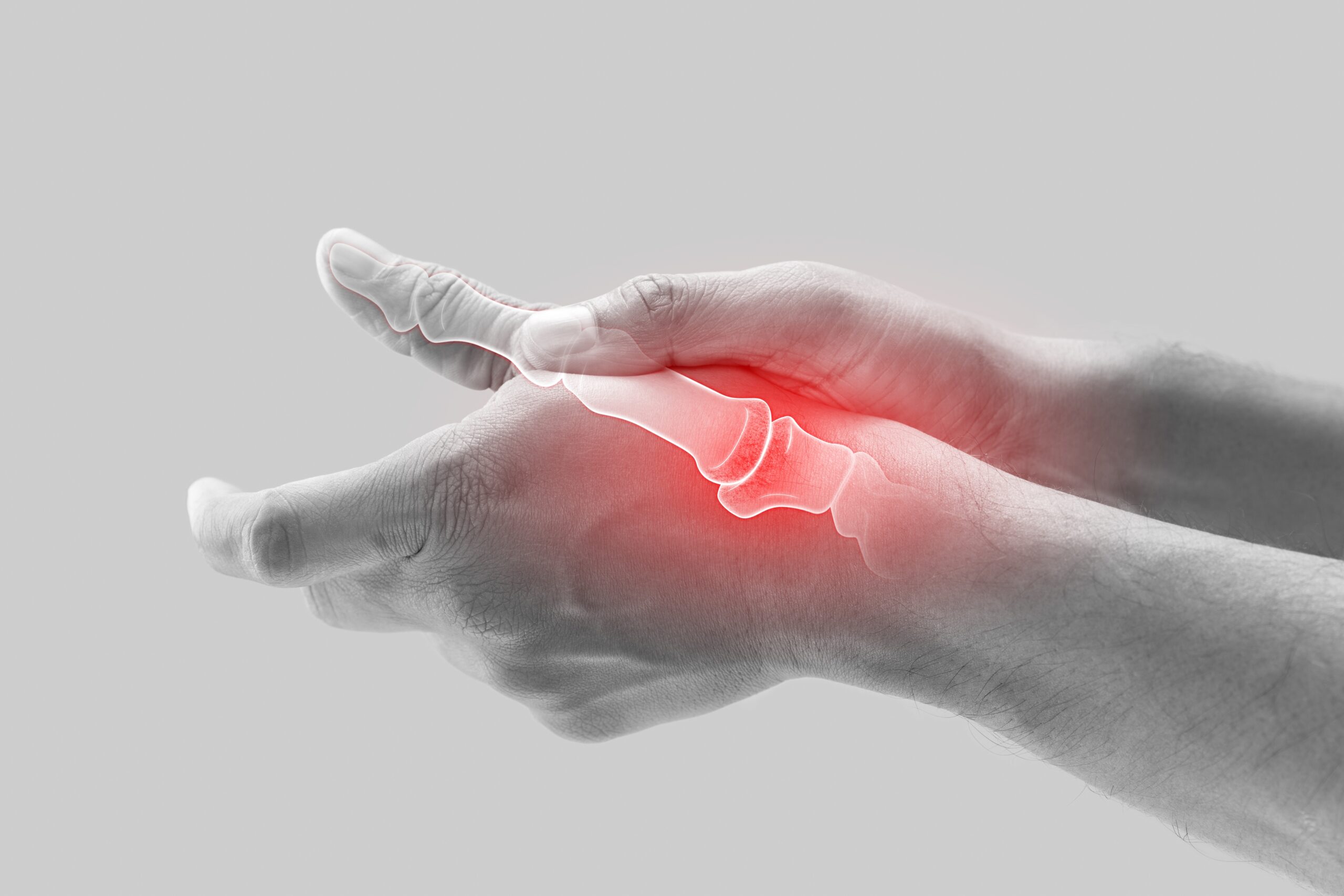
Common Symptoms
- Pain at the base of the thumb, especially when gripping or pinching
- Weakness when opening jars or turning keys
- Swelling or a bony prominence at the thumb base
- Reduced movement or stiffness
- Grinding, clicking, or “crunching” sensation with movement
Typical Causes
The condition develops gradually due to wear and tear (osteoarthritis) of the joint between the base of the thumb and the trapezium bone. It is more common in women over 50 and may follow previous injury or repetitive strain. Joint laxity, family history of arthritis, and inflammatory conditions such as rheumatoid arthritis can increase the risk.
Seek urgent help if
You experience sudden swelling, warmth, redness, or severe pain at the thumb base, particularly following an injection or after surgery, as this could indicate infection or acute inflammation requiring prompt assessment.
Call 999 for emergencies, or NHS 111 for urgent advice.
On this page:
Symptoms
Pain is usually felt at the junction between the wrist and the thumb, often described as an aching or burning discomfort that worsens with grip or pinch. Tasks such as turning a key, wringing out a cloth, or opening jars become difficult. The thumb may gradually drift into a “Z-shaped” deformity, with the base of the thumb appearing prominent and the tip angling outwards.
Swelling and tenderness are common, and some patients report grinding or clicking sensations as the joint surfaces rub together. Morning stiffness and reduced dexterity may also occur. Symptoms often progress slowly over months or years.
Causes / Risk Factors
The trapeziometacarpal joint at the base of the thumb is highly mobile, allowing a wide range of motion essential for grip and fine manipulation. Over time, the joint surfaces can wear, leading to loss of cartilage, bone friction, and inflammation.
Risk factors include:
- Age over 50
- Female gender (due to ligament laxity and hormonal influences)
- Family history of thumb arthritis
- Repetitive manual work or heavy use of the hands
- Previous thumb injury or fracture
- Generalised joint hypermobility or inflammatory arthritis
Although the condition can affect both hands, symptoms are usually worse in the dominant hand.
Investigations & Diagnosis
Diagnosis is based on the clinical history and examination findings. Typical features include tenderness over the base of the thumb and pain on the grind test, where gentle axial compression and rotation reproduce the discomfort.
Investigations may include:
- X-rays to confirm joint-space narrowing, bone spurs, or subluxation.
- Ultrasound to assess joint inflammation or exclude adjacent tendon problems.
- MRI occasionally, in complex or early cases, to visualise cartilage loss and associated soft tissue changes.
The severity of arthritis is often graded radiologically (Eaton-Littler classification), helping to guide treatment planning.
Treatment Options
Non-surgical
- Activity modification: avoiding repetitive pinching or heavy grip when possible.
- Splints: thumb-spica or custom thermoplastic splints help rest and support the joint, often relieving symptoms.
- Corticosteroid injection: provides targeted anti-inflammatory relief, often improving pain for several months. Injections may be repeated if necessary but are limited to avoid soft tissue thinning.
- Physiotherapy: gentle exercises and joint protection techniques maintain movement and strength.
- Analgesia: simple painkillers or topical anti-inflammatories may provide temporary relief.
Surgical
Surgery is recommended when pain persists despite conservative management and significantly interferes with daily life. Options include:
- Trapeziectomy: removal of the trapezium bone to eliminate painful bone contact. This remains the gold standard for most patients and may be combined with soft tissue interposition or ligament reconstruction.
- Trapeziectomy with ligament reconstruction/tendon interposition (LRTI): uses a portion of tendon (often Flexor Carpi Radialis – FCR) to stabilise the thumb and maintain space after trapeziectomy.
- Arthrodesis (fusion): occasionally used in younger or high-demand manual workers, providing stability at the expense of some movement.
- Joint replacement (arthroplasty): suitable for selected cases; offers faster recovery but with less long-term data compared to trapeziectomy.
Your surgeon will recommend the best approach based on your age, occupation, and symptom severity.
Recovery & Follow-up
Recovery depends on the chosen treatment.
After injection, pain relief may occur within a few days and last for several months. Following trapeziectomy surgery, the thumb is usually immobilised in a splint or cast for around 4-6 weeks, followed by physiotherapy to regain movement and strength.
Light hand use is typically possible within a few weeks, with most patients returning to normal activity by 8–12 weeks. Residual stiffness and mild weakness may persist initially but generally improve with rehabilitation.
Long-term results after trapeziectomy are excellent, with reliable pain relief and restoration of function for the majority of patients.
When to seek urgent help
Seek urgent review if you experience increasing redness, swelling, or discharge after an injection or operation, severe pain unrelieved by simple analgesia, or new numbness or tingling in the thumb. These may indicate infection, inflammation, or nerve irritation that requires prompt assessment.
Call 999 immediately or attend A&E if you have a new injury with loss of movement or sensation in the hand, rapidly spreading redness or swelling with fever, or sudden severe weakness.
Use NHS 111 for urgent same-day advice if your symptoms are getting quickly worse.
If you’re experiencing base of thumb CMCJ arthritis or related symptoms, we can confirm the cause and tailor a plan – often starting with splints/hand therapy and exercises, with medicines, injections or surgery only where appropriate.
This page provides general information and is not a substitute for individual medical advice.
For emergencies (severe/new weakness, spreading infection, uncontrolled pain, significant injury) call 999, or use NHS 111 for urgent guidance.
Appointments:
- Self-pay patients can book without a GP referral
- Insured patients (Bupa, AXA, Aviva, Vitality, WPA, etc…) can book once authorised.
Clinics are available at:
- The Harborne Hospital – HCA, Birmingham
- Nuffield Health Wolverhampton Hospital
- The Priory Hospital, Birmingham
To book or ask a question, contact Vikki (Private Secretary):
☎ 07510 417479
✉ [email protected]