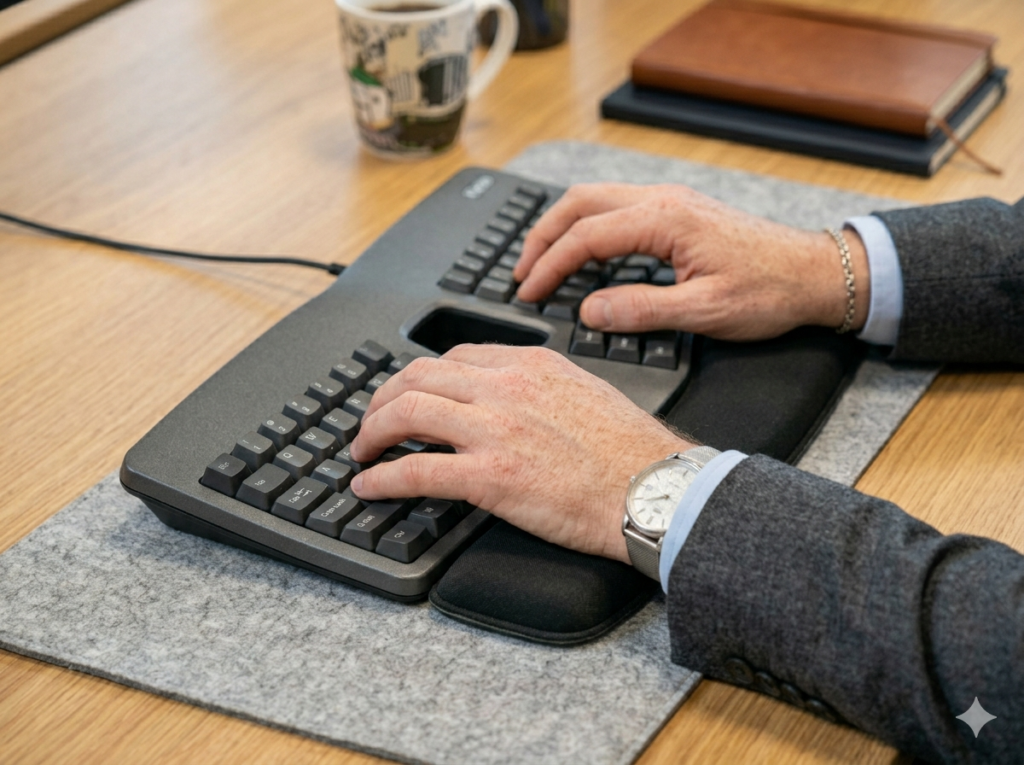
Many people experience hand, wrist or forearm discomfort during prolonged computer work. Small ergonomic changes can sometimes reduce strain by improving wrist position, forearm support and workstation set-up.
This category focuses on practical examples such as vertical mice, wrist rests, laptop stands and ergonomic keyboards. The aim is not to sell specialist equipment for its own sake but to show the type of changes that may help when symptoms are aggravated by desk-based work.
Ergonomic equipment tends to work best when combined with posture, desk-height and break-taking adjustments.
When to seek medical advice
If symptoms include persistent numbness, night symptoms or progressive weakness, those features should be assessed rather than attributed solely to workstation set-up.
The items below are examples of commonly available products. They are not personalised recommendations and equivalent items from other suppliers may be suitable.
Patients should check product descriptions, sizing information and customer reviews, and should compare alternatives before purchasing.
Some links on this page direct to Amazon. As an Amazon Associate I earn a small percentage from qualifying purchases. This does not affect the price you pay.
Vertical mouse
Best for: Carpal Tunnel Syndrome, De Quervain’s Tenosynovitis
Encourages a more neutral forearm position than a standard mouse.
Prefer to speak to someone? Call my private secretary, Vikki Hibbert, on 07510 417479 or email Secretary@ExpertHandSurgery.co.uk for advice or to arrange an appointment.